At the moment I wish I could share everything that's happening- but as not all of it is immediately relevant to Mutwale, I'll keep it brief.
In Early February I was asked to guest speak at UNC Chapel Hill in a Global Cinema class, where I presented some of Mutwale in animatic form as well as some animation tests. This was in part during a discussion of genocide on film in a post-colonial context. Mutwale, although it is not about these topic directly, touches on them in some indirect ways. It was a very crucial step in development to define how the film would treat certain topics when it comes to the African continent. It was nice to discuss some of these upfront goals in a classroom setting, namely: 1) To avoid Africa in a post-colonial light, and in fact to, even when dealing with colonial topics, not have a 'Western' tinge over the viewpoints and perspectives in the film. and 2) To attempt whenever possible to portray events with as much truth as could be gathered without the tendency of the Western reports of things to adopt certain stances that ignored colonial influences at the start of the century. In other words, the Africa I want to portray in both tone and events is the Africa as it was and is, not the one as the West sees it.
There are many, many things in development here at my studio-- not the least of which is an animated music video commission for a beautiful song by a lovely local singer/songwriter. It's currently passing from animatic to production-- but this doesn't mean Mutwale is on the back burner. I have several shots from the film working at once at the moment, the only thing that delayed the work I've been doing was moving into a new house recently.
Thank you all for your patience. Contributors to the film, and anyone who took part in the failed kickstarter: the film goes on. It will take a little bit longer than I'd like to admit, but with things continuing to move, there will be a film yet.
20140321


20130507
Kickstarter, or: Into the Belly of the Braff
The kickstarter for Mutwale is live and rolling along at a steady pace. The film is 25% funded! I can't thank the backers enough- but the pledge rewards are starting to come in and this is great stuff. The plush by The Amazing Owl has a prototype!

Am excite! The eye piece will be bigger and possibly a diff't color, I'll talk to them about it. But overall that is one fine lookin' pachyderm plush.
The tee designs are just about ready, so I'll put in an order for those next. I've designed a poster as well, but I think it isn't quite the tone that represents the film, so I think it'll be a 'B-roll' poster that backers will get in digital form.
There's a lot of Zack Braffery going around reddit and the rest of the interwebs concerning the kickstarter for his next film. I won't get into it too much here; all I will say is that if you look at his kickstarter campaign, it starts with a quote from Thomas Edison. Only a naive person would consider Edison worth quoting, but the quote is "there are no rules here, we're trying to accomplish something." Really, Braff? Edison destroyed Nikola Tesla's life and work with a selfish war of slander and backhanded tactics, he tried to kill cinema with a patent on his camera (thanks, Lumieres for inventing it first,) and he claimed credit for untold numbers of patents that were blatantly ripped off from other inventors. Let's not forget that time he electrocuted a live elephant named Topsy to make it look like Tesla's Alternating Current was more dangerous than Direct Current. (It's not.) He constantly sold out to higher powers, and he helped bring about about industrialization with little to no thought about impact either to economy or to environment. Edison was a dick. Anyone who doesn't think so is living in a third-grade stage-play. So that quote about rules? Yeah, Edison needed some, and so did the highly destructive post-industrial corporate sharktank he helped create.
So within 8 seconds of viewing Zach Braff's kickstarter I wanted to throttle his wonky face with a truncheon. It had nothing to do with his film really, but people make a good point. The implications of a Hollywood actor raising money on Kickstarter are many. There's plenty of talk around the web, and the consensus seems to lean toward something like "This is not what Kickstarter is for." By the way, no judgement here, but if it tells you anything further about the semi-controversy: Zach Braff is worth 22 million dollars.
I need to raise about 0.059% of that to make a movie. Or, about 0.43% of what his campaign raised in 48 hours. That's easy right? TELL YOUR FRIENDS ^_^
We don't need much folks!


Am excite! The eye piece will be bigger and possibly a diff't color, I'll talk to them about it. But overall that is one fine lookin' pachyderm plush.
The tee designs are just about ready, so I'll put in an order for those next. I've designed a poster as well, but I think it isn't quite the tone that represents the film, so I think it'll be a 'B-roll' poster that backers will get in digital form.
There's a lot of Zack Braffery going around reddit and the rest of the interwebs concerning the kickstarter for his next film. I won't get into it too much here; all I will say is that if you look at his kickstarter campaign, it starts with a quote from Thomas Edison. Only a naive person would consider Edison worth quoting, but the quote is "there are no rules here, we're trying to accomplish something." Really, Braff? Edison destroyed Nikola Tesla's life and work with a selfish war of slander and backhanded tactics, he tried to kill cinema with a patent on his camera (thanks, Lumieres for inventing it first,) and he claimed credit for untold numbers of patents that were blatantly ripped off from other inventors. Let's not forget that time he electrocuted a live elephant named Topsy to make it look like Tesla's Alternating Current was more dangerous than Direct Current. (It's not.) He constantly sold out to higher powers, and he helped bring about about industrialization with little to no thought about impact either to economy or to environment. Edison was a dick. Anyone who doesn't think so is living in a third-grade stage-play. So that quote about rules? Yeah, Edison needed some, and so did the highly destructive post-industrial corporate sharktank he helped create.
So within 8 seconds of viewing Zach Braff's kickstarter I wanted to throttle his wonky face with a truncheon. It had nothing to do with his film really, but people make a good point. The implications of a Hollywood actor raising money on Kickstarter are many. There's plenty of talk around the web, and the consensus seems to lean toward something like "This is not what Kickstarter is for." By the way, no judgement here, but if it tells you anything further about the semi-controversy: Zach Braff is worth 22 million dollars.
I need to raise about 0.059% of that to make a movie. Or, about 0.43% of what his campaign raised in 48 hours. That's easy right? TELL YOUR FRIENDS ^_^
We don't need much folks!
20130501
Project completed: VST GUI and Mutwale Kickstarter
It's been a long 5 or 6 weeks on these two projects. The newest PluginGuru.com VST plugin has a nice working interactive GUI courtesy myself and a helpful programmer. And of course the Guru, aka Skippy, who built the huge sample library. It's available as a sample library in the audio industry staple Native Instruments Kontakt 5 sampler. I think the Guru is trying to make the extension offical so that it can be used with the free Kontakt Player, but I won't have word on that for a while. It may also be compatible with other soft-samplers, but that's out of my realm. It's been a long on-and-off Photoshop adventure with 100+ layers, several tabs, animated knobs and buttons, and a luchador banging on drums with fiery drumsticks. (Sadly the luchador himself was not part of my commission, not sure who drew him.) Fun stuff- but honestly I'm more excited about the new Plugin Guru intro animation, which was completed in March, but has been on hold for this VST to come out. I'm pretty proud of the Guru intro- it's a solid piece of animation and it's my first lone-gun 2D commission.
And FINALLY, The Kickstarter for my film has been submitted for approval. It takes a few days of review before I can launch. It's been a lot of work, and I would describe it more but I'd like to think the effort is all up there on the page. Here's to hoping! I'll be back when it's live to talk about the process.
And FINALLY, The Kickstarter for my film has been submitted for approval. It takes a few days of review before I can launch. It's been a lot of work, and I would describe it more but I'd like to think the effort is all up there on the page. Here's to hoping! I'll be back when it's live to talk about the process.
20130403
Taking the good with the good
Hey hey! Yeah It's been... /looks at watch... 8 months since I posted here but that's all right. I am no longer running HD Pro Production (thank the gods) and I'm back working on an animated film that is exponentially better than being videographer, producer, editor, motion graphics designer, production coordinator, and studio manager, all for entry-level pay. It was a bit much all around. I expressed myself very well throughout the year, often played the sole creative lead tasked with keeping clients happy by providing tangible services, and along the way I gained a boatload of experience. Overall, I did very well. I made over 200 commercial and corporate spots for the auto industry, churches, a pill capsule factory, the Muscular Dystrophy Association, Bilo Charities, wedding dress and prom houses, lawyers, and websites. And this film I'm working on compared to even the best of those spots: 1000% more fun to watch, with 1.0X10^23 higher production values.
The bad news, is, of course, that there is one less person making local TV ads who knows not to peak audio above -12db. So if there's a higher percentage of commercials that blast you awake at 5 am after falling asleep in front of the tube, that'd be the stock of which I am no longer a part. Although I did leave a textedit file on the studio edit bay desktop in allcap 48 pt. font that said "FOR THE LOVE OF GOD DON'T PEAK AUDIO ABOVE -12DB."
There will definitely be a rant on working in advertising, and an HD Pro postmortem post in the coming weeks. I have plenty to say. But- later.
I'm nearly finished with a kickstarter campaign- it's going to rock. This film has been growing since 2008 and it's still my golden child. If the kickstarter doesn't work, I'll just start my own animation firm servicing web clients (I wish I could link to my last happy animation client... still waiting on him to update his site.) If that doesn't work, I'll just do manual labor and sell paintings and animate when I can. Anything in the job market is better than being a slave to advertising slimeballs.
In other news, I'll be key grip on a SCAD student film shooting here in Greenville later this month. I had been cast in the lead role, but the writer/producer decided he cast too young. That worked out, as I am incredibly nervous about acting. It's far more comfortable back behind the camera. And honestly, one of the best places to be on a student film is the people who carry shit from place to place. And they're shooting with a RED. I have never seen one in action.
More about the kickstarter stuff very soon! I can't stop using exclamation points! It's exciting!
The bad news, is, of course, that there is one less person making local TV ads who knows not to peak audio above -12db. So if there's a higher percentage of commercials that blast you awake at 5 am after falling asleep in front of the tube, that'd be the stock of which I am no longer a part. Although I did leave a textedit file on the studio edit bay desktop in allcap 48 pt. font that said "FOR THE LOVE OF GOD DON'T PEAK AUDIO ABOVE -12DB."
There will definitely be a rant on working in advertising, and an HD Pro postmortem post in the coming weeks. I have plenty to say. But- later.
I'm nearly finished with a kickstarter campaign- it's going to rock. This film has been growing since 2008 and it's still my golden child. If the kickstarter doesn't work, I'll just start my own animation firm servicing web clients (I wish I could link to my last happy animation client... still waiting on him to update his site.) If that doesn't work, I'll just do manual labor and sell paintings and animate when I can. Anything in the job market is better than being a slave to advertising slimeballs.
In other news, I'll be key grip on a SCAD student film shooting here in Greenville later this month. I had been cast in the lead role, but the writer/producer decided he cast too young. That worked out, as I am incredibly nervous about acting. It's far more comfortable back behind the camera. And honestly, one of the best places to be on a student film is the people who carry shit from place to place. And they're shooting with a RED. I have never seen one in action.
More about the kickstarter stuff very soon! I can't stop using exclamation points! It's exciting!
20120715
endearing/horrifying
I don't like polar binaries but I thought these two extremes were noteworthy
Here's a great example of something so freaking endearing it's almost surreal.
And here's a perfect example of something you never want to see in real life.
Bonus- that woman's nervous laugh is off the hook.
Here's a great example of something so freaking endearing it's almost surreal.
And here's a perfect example of something you never want to see in real life.
Bonus- that woman's nervous laugh is off the hook.
20120712
A wild kickstarter appears!
I've been researching the do's and don'ts of the kickstarter platform and it is, of course, a difficult thing to pull off. So there's been some brainstorming about perks and some writing of a video that I will produce for the frontpage- even an enlisting of one of those awesome voiceover guys that will do VO for a segment. I was thinking of having him do a mock trailer but now I'm leaning towards something like having him VO a portion of an animator's day. Totally dramatic and deep voice narrating mundane shit with a hardcore soundtrack. Maybe some explosions. Gods, I've been making car commercials for too long...
With perks- things like tees, one-sheets, framed drawings- comes some budget finagling to account for the added expenses. Then there's how to tier the fundraising. Setting a lower goal is more realistic, but a higher one will benefit the project more. Of course there is always the trend of going viral and raising some percentage more than your goal, but this is a challenge. There's really no such thing as deliberately going viral, but I have some ideas for some quirks in the campaign that will make it unique and fun to talk about. That's a start.
I think I'm up for it, but it will take some time to put everything together.
A brief aside: things like IndieGoGo and Rockethub are worth looking into, but most likely what you'll find is that the reach to people who will actually contribute to a stranger's campaign simply isn't there.
With perks- things like tees, one-sheets, framed drawings- comes some budget finagling to account for the added expenses. Then there's how to tier the fundraising. Setting a lower goal is more realistic, but a higher one will benefit the project more. Of course there is always the trend of going viral and raising some percentage more than your goal, but this is a challenge. There's really no such thing as deliberately going viral, but I have some ideas for some quirks in the campaign that will make it unique and fun to talk about. That's a start.
I think I'm up for it, but it will take some time to put everything together.
A brief aside: things like IndieGoGo and Rockethub are worth looking into, but most likely what you'll find is that the reach to people who will actually contribute to a stranger's campaign simply isn't there.
20120611
Prometheus Review: The False Lightbringer
There's a bias that tags along when seeing a movie with friends. Some friends hate things that you love, others enjoy things you hate. So to give some perspective on my group's bias- in preparation for this film's release, myself and several of my mates watched Alien. Every single person that watched it agreed: Ridley Scott's 1979 Alien is a fucking amazing movie.
Walking out of Ridley Scott's 2012 Prometheus was also a unanimous vote: this piece of shit never needed to be made. What warrants such a kneejerk reaction? A natural question and one with many answers. The simplest is that it was written by hacks who suck at writing and was directed by someone who is highly capable, but for some reason enjoyed the terrible screenplay enough to not fire the writers, burn the script, pour the ashes into a glass of water, and then force the writers to drink the sludge before poking their eyes out and punching them repeatedly in the face.
I was pumped for this movie. I was tipped that it might be bad, but I hoped against these odds. A friend noted that the screenwriters, Damon Lindelof and Jon Spaihts, are rather spotty. The former might be better known as one of the team members that helped turn LOST into a festering compost of wasted potential. The latter wrote 2011's The Darkest Hour. You remember that one? Yeah, exactly. It's hard to remember something when it gets an 11% at rotten tomatoes and a metascore of 16. These guys suck at their jobs, and they probably earn more on a single script than most of us do in years of working.
I don't know whether to list their mistakes in chronological order or by magnitude of shittiness so I'll just start with segments and hopefully it will coalesce into something. Seems natural enough, since neither screenwriter really made an attempt to craft anything meaningfully coherent either. Gods, I have so many problems with this script I'm actually having a hard time starting with a single one. Obviously from here there are serious spoilers.
I'll start with something positive.
THE ONE POSITIVE SENTENCE IN THIS REVIEW OF THIS MOVIE
There are some uses of Giger's original concepts from '78 that look great.
SCREENWRITING 101
Some of what I point out in this section comes straight out of Intro to Dramatic and Visual Writing. Some of it is plain common sense.
Don't go backwards. The characters progress forward nicely through the first portion of the film. You get some exposition, some introductions, the obligatory gruff male who doesn't want to be friends with anyone (who, in a double-down yawn-worthy cliché, later turns out to be a coward) etc. Obligatory unexciting holographic briefing. They land the ship outside of some curious structures and the adventure begins. Except. The adventure goes into that first pyramid structure and instead of progressing from there goes back to the ship. Then back to the pyramid. Then back to the ship. Then back to the pyramid. Which turns out to be another ship. Then back to the ship. Then- HOLY GOD how many times are you going to go back to the same pylon? You're n.nX10^14 miles from earth on a strange planet and we stay in the same place the whole time. Lame.
Don't create entire scenes around exposition. At one point Captain Stringer Bell approaches Scientist Elizabeth about leaving for Earth. Shit's going down, he says. Elizabeth wants to stay to join the expedition because one of the Engineers is still alive. First off, the scene before this Elizabeth wants to go back to Earth but is convinced otherwise. The next scene, here she is convincing someone else of the exact same thing. She's doing what just happened to her to someone else in the very next scene. It's like later how all these characters who are at complete odds and essentially being enemies all find themselves in the same room of the ship suiting up for the final expedition. "Oh, hey enemy. Nice to see you again how's your ruptured uterus and yer dead dad snark snark." Fucking slipshod. Wait, what was I talking about? Keep it together, man. Right. So Stringer Bell is being convinced not to go back to Earth by Elizabeth. In this scene, nothing happens to further the story. It's two characters exchanging information and setting up what is to occur next. Instead of the movie flowing organically into what occurs next, two people stand in a room and talk about it. It's not at all important because none of the setup holds any sway over anything. And in the middle of this scene (that ends so freaking awkwardly with Captain Bell leaning up against a wall and crossing his arms, then cutting away) he says the most interesting thing in the movie. This isn't a homeworld, it's a weapons manufacturing plant. How did he come up with this? It's sort of awesome. I want to know more about that. As long as it doesn't happen in a scene like this. All of this is summed up nicely in the brief talk that Trey Parker and Matt Stone gave when they crashed an NYU writing class. Things must cause other things, or start a chain that effects other things. You can't just string a bunch of shit together and call it a story.
There is a huge difference between character arc and just plain out-of-character. Captain Bell is all about self-serving. He wants to play his accordion and get laid. He wants to go home. He doesn't know what's up. Until suddenly he knows what's up better than most and is willing to sacrifice his life to protect Earth from... nobody knows what, exactly, but probably annihilation. There is no reason for this change, it just happens. So he and his two compadres who only have enough screen time to talk about a an offscreen bet and how hot the cold corporate bitch Theron is. Other than that, they only get reaction shots and quick unmemorable lines. So these three suddenly kill themselves in sacrifice for the greater good. Why? How did they come to this decision? Doesn't matter. 'Why' assumes motivation, and these characters aren't fleshed out enough to have any. They only exist to serve the plot, and in this case the plot arbitrarily dictates that this science vessel carrying 1 Trillion dollars of equipment, 17 personnel, and the head of a major corporation has no weapons. I'll say that again for emphasis. The vessel carrying Weyland himself is not armed. Except flamethrowers, and there's a security chief very set on having weapons to protect the scientists. Wait, what? And they have pistols because they shoot stupid super hulk monkey thing with it. Stupid arbitrary decisions that serve the plot are almost always opposed to character and never happen if your characters are fleshed out and made real.
Nobody cares about stupid familial ties any more. Especially if you suck at writing them. At one point the screenwriters attempt to drop the bomb that the main(ish) character Elizabeth is barren. Infertile. We don't care because we don't know that Elizabeth wants children. Actually she's so consumed in her work that we just assume she's a career type and since it's never discussed we don't have any context to care nor any subtext to resonate with. So it fails. At another point the screenwriters basically gaffe the fuck out of the script by revealing that Charlize Angry Corporate Bitchface is Weyland's daughter. Wow, guys, that's your best? Nobody. Fucking. Cares.
Meaningful interaction is built through subtext. Nearly every aspect of scene and character is overt in this film. Everyone is 2-dimensional and transparent. The only character of depth is a robot. Which, strangely, is called a robot by many characters- in the world of Alien it seems people that use the word "synthetic" but that's beside the point. There is no repartee and no hidden meaning or even double meaning in any dialogue.
Wearing a cross is the most obvious metaphor for faith ever and please for the love of gods and all that is holy stop using it. Please fucking stop this. It's not 1997. Losing the cross while the character loses faith/getting the cross back when character regains faith is the oldest, most overused metaphor ever. It sucks and I hate it, everyone should see through your terrible hackery and burn you at the stake for it. I hate you, writers of Prometheus. You suck Hollywood cock in hell.
LACK OF REVISION = LACK OF POLISH
You know screenwriters, I'll let you get away with people travelling two years through space with 90% of the crew not knowing their mission. And I'll let you get away with the captain saying "everybody buckle up, it's gunna be bumpy," just before he unstraps himself and stands freely at a console in front of glass windows like the spaceship from 2098 is a bomber from World War II. I'll even let you get away with them announcing in a fit of exposition that the atmosphere is 70%N2 10%O2 3%Ar2 or whatever, which they'd know before they set out or at least before they start landing. But sweet pantheon of gods almighty, if you plant that the atmosphere is 3% carbon monoxide, which will kill you in 2 minutes, you should probably use that information somewhere else in the film. Otherwise WHY THE FUCK IS IT THERE. I mean, other than the fact that for some reason the characters are taking their helmets off and putting them back on like 4 times apiece per fucking scene. Super irritating. At no point is a helmet-off-life-or-death-situation presented. No one nearly asphyxiates because they are running out of air. It's never used for danger, only for slight suspense as someone takes their helmet off to prove that an interior is terraformed. Then screams "wooo!" and later dies horribly. To their credit, this needed to happen, only sooner. Either way, totally pointless crap that wastes everyone's time.
There's a glaring problem in having Weyland of Weyland Enterprises present in any form. Let alone the fact that he pops up on the ship for no reason. I'll come back to this but I'll say here that this should have been removed from the script before it was even greenlit.
The climax is a mess and needed a complete rewrite. It literally culminates with one major and two minor characters committing suicide with comical gusto and from out of nowhere. Then the Navigator (presumably from the first film, I don't know, let's say 'a' Navigator) Engineer attacks everyone. Then the ship crashes and rolls around vertically like a donut of doom towards the remaining characters who proceed to run directly forward, staying in its deadly path the whole time. As opposed to, you know. Turning left. Or right. Either one. /facepalm.jpg
MECHANICAL DESIGN IS AS IMPORTANT AS COSTUME DESIGN
In the future of prometheus, there are huge hologram rooms but dune buggies look like they came from 1985. There are gorgeous shiny diving-rig style suits for zero-G but the ground crew looks like they have fabric with some Spaceballs patches. Space helmets are HUGE and come off very, very easily- which you will see about 1,200 times. And- what strikes me as super strange- a spaceship still needs HUGE propulsion engines to get around and to land, but little mining scanner POP balls can defy gravity with no visible means of propulsion. ...If you've cracked gravity for small things, you've cracked it for big ones. It's gravity. Wouldn't you just outfit the ship with a larger version of the zero-G balls? Think about your shit before you put it in your movie.
IN SPACE, NO ONE CAN HEAR ABOUT THIS MOVIE.
I'll get into the plot, but I'll keep it brief as there are so many useless plants and hanging threads it made everyone's head spin.
Ok, so the film starts with this super muscular pale hairless being drinking mystery fluid which breaks down his DNA and reforms it in a water pool as another type of DNA, probably the seed for what we evolve from on Earth. Sounds important, right? Nope. Doesn't matter. Sounds like it does, but it doesn't. This mystery fluid seems to be something that breaks down life and causes it to reform from its base structure- except that later it's really just an excuse for the writers to make some monsters. Some worms that kill things. Also tiny worms that pop out of people's eyeballs and can evidently spread through semen and impregnate/grow at super rates. Also the babies from this grow really fast and eventually lay eggs in somethings's thorax. Or, hey- it just turns a man into some random super-ape-hulk that attacks people. It's literally just an attempt to motivate the creation of monsters, or us. Now that I think about it the stuff reminds me of Ivan Reitman's Evolution with less Julianne Moore, David Duchovny, and 7-Up guy.
And here I would add in more about the plot but it's all useless. Some plot holes of note: Why are the engineers hostile? How do people know that they are before they awaken the lone survivor? How does David know that the engineers are going to destroy Earth? He says "sometimes to create one must destroy" but what would they be creating by destroying Earth? How does David sneak a pot aboard the ship with no one in the crew noticing along the way? Why does the miracle fluid kill an Engineer immediately but gestate in Dr. Holland for a day and then have different effects? Why does the navigator leave the chair to attack Elizabeth? Is this even the same ship that sends a distress signal to the Nostromo? Is this even relevant to the world of Alien? If any of this is made clear I missed it.
THIS IS NOT AN ALIEN MOVIE
I don't want to hear about mythos. I don't want to see faith-driven scientists go on an epic expedition to try to explain life itself. I want to see a fucking alien rip humans apart in exceedingly horrifying circumstances. And I want to watch that one good soul that follows protocol and turns out to be tough as nails young woman who survives everything. Dr. Elizabeth whats-her-face has none of these characteristics. She's useless and then basically crippled throughout the film, and then finally collapses, cries, and apologizes to God and her dead boyfriend as she gives up. It's David that wakes her up and puts her on a mission. David, an asexual male Adonis, brings the poor helpless woman back from hysteria and death. This breaks a rule of the series in a bad way. Actually now that I think about it, it's not even made clear who the main character is aboard the Nostromo- you know who everyone is, and the first time you watch it you fear for Ripley because she's not really a lead character. She just turns into one in front of you. It's brilliant.
And this brings me to the monsters. Tentacle monsters are stupid. The original design of the alien was phallic, menacing- a glistening sticky carapace of silicate and acid flesh that will rip you apart. It's unique, it's scary, and it's fucking awesome to watch. Stupid squidthings do not belong in an alien movie. Aliens kill stupid squidthings and stand up to shit like Predators. And you know what? The tentacle/squid pregnancy stuff is bullshit. The psychosexuality of Alien can be pretty straightforward- especially in the final scene of the first film. It's feminine rage against an unstoppable libidinous murder machine with a head shaped like a dick. Pretty straightforward metaphor, and universal. None of this 'I'm barren/Oh god I want an abortion' shit. Too focused in on a character we don't really feel for.
I was shaking my head at this. Weyland of Weyland Corp is presented in a hologram form then turns out to be on the ship. Not only is this useless- there is no reason for him to be there- but it's sacrilege to the Alien series. The corporation always has a face and that face will always smile at you until it tries to kill you. But that face is never, ever, ever a leader of the corporation. It's always a lackey doing the corporation's dirty work, and they always pay for it. Weyland is present as a logo and a well-paid lackey hellbent on using the alien as a weapon. That's an Alien movie.
Finally. At the end, there's a shot of an Alien being born. It looks like a pokemon.
As cinemadope's Glenn Lovell writes 'Alien' fans aren't looking for arty sci-fi or answers to 'the most meaningful questions asked by mankind'; they're looking for something primal, like a cattle prod to the back of the neck.
Fuck yeah we are. This was more like a limp noodle to the wrist.
Walking out of Ridley Scott's 2012 Prometheus was also a unanimous vote: this piece of shit never needed to be made. What warrants such a kneejerk reaction? A natural question and one with many answers. The simplest is that it was written by hacks who suck at writing and was directed by someone who is highly capable, but for some reason enjoyed the terrible screenplay enough to not fire the writers, burn the script, pour the ashes into a glass of water, and then force the writers to drink the sludge before poking their eyes out and punching them repeatedly in the face.
I was pumped for this movie. I was tipped that it might be bad, but I hoped against these odds. A friend noted that the screenwriters, Damon Lindelof and Jon Spaihts, are rather spotty. The former might be better known as one of the team members that helped turn LOST into a festering compost of wasted potential. The latter wrote 2011's The Darkest Hour. You remember that one? Yeah, exactly. It's hard to remember something when it gets an 11% at rotten tomatoes and a metascore of 16. These guys suck at their jobs, and they probably earn more on a single script than most of us do in years of working.
I don't know whether to list their mistakes in chronological order or by magnitude of shittiness so I'll just start with segments and hopefully it will coalesce into something. Seems natural enough, since neither screenwriter really made an attempt to craft anything meaningfully coherent either. Gods, I have so many problems with this script I'm actually having a hard time starting with a single one. Obviously from here there are serious spoilers.
I'll start with something positive.
THE ONE POSITIVE SENTENCE IN THIS REVIEW OF THIS MOVIE
There are some uses of Giger's original concepts from '78 that look great.
SCREENWRITING 101
Some of what I point out in this section comes straight out of Intro to Dramatic and Visual Writing. Some of it is plain common sense.
Don't go backwards. The characters progress forward nicely through the first portion of the film. You get some exposition, some introductions, the obligatory gruff male who doesn't want to be friends with anyone (who, in a double-down yawn-worthy cliché, later turns out to be a coward) etc. Obligatory unexciting holographic briefing. They land the ship outside of some curious structures and the adventure begins. Except. The adventure goes into that first pyramid structure and instead of progressing from there goes back to the ship. Then back to the pyramid. Then back to the ship. Then back to the pyramid. Which turns out to be another ship. Then back to the ship. Then- HOLY GOD how many times are you going to go back to the same pylon? You're n.nX10^14 miles from earth on a strange planet and we stay in the same place the whole time. Lame.
Don't create entire scenes around exposition. At one point Captain Stringer Bell approaches Scientist Elizabeth about leaving for Earth. Shit's going down, he says. Elizabeth wants to stay to join the expedition because one of the Engineers is still alive. First off, the scene before this Elizabeth wants to go back to Earth but is convinced otherwise. The next scene, here she is convincing someone else of the exact same thing. She's doing what just happened to her to someone else in the very next scene. It's like later how all these characters who are at complete odds and essentially being enemies all find themselves in the same room of the ship suiting up for the final expedition. "Oh, hey enemy. Nice to see you again how's your ruptured uterus and yer dead dad snark snark." Fucking slipshod. Wait, what was I talking about? Keep it together, man. Right. So Stringer Bell is being convinced not to go back to Earth by Elizabeth. In this scene, nothing happens to further the story. It's two characters exchanging information and setting up what is to occur next. Instead of the movie flowing organically into what occurs next, two people stand in a room and talk about it. It's not at all important because none of the setup holds any sway over anything. And in the middle of this scene (that ends so freaking awkwardly with Captain Bell leaning up against a wall and crossing his arms, then cutting away) he says the most interesting thing in the movie. This isn't a homeworld, it's a weapons manufacturing plant. How did he come up with this? It's sort of awesome. I want to know more about that. As long as it doesn't happen in a scene like this. All of this is summed up nicely in the brief talk that Trey Parker and Matt Stone gave when they crashed an NYU writing class. Things must cause other things, or start a chain that effects other things. You can't just string a bunch of shit together and call it a story.
There is a huge difference between character arc and just plain out-of-character. Captain Bell is all about self-serving. He wants to play his accordion and get laid. He wants to go home. He doesn't know what's up. Until suddenly he knows what's up better than most and is willing to sacrifice his life to protect Earth from... nobody knows what, exactly, but probably annihilation. There is no reason for this change, it just happens. So he and his two compadres who only have enough screen time to talk about a an offscreen bet and how hot the cold corporate bitch Theron is. Other than that, they only get reaction shots and quick unmemorable lines. So these three suddenly kill themselves in sacrifice for the greater good. Why? How did they come to this decision? Doesn't matter. 'Why' assumes motivation, and these characters aren't fleshed out enough to have any. They only exist to serve the plot, and in this case the plot arbitrarily dictates that this science vessel carrying 1 Trillion dollars of equipment, 17 personnel, and the head of a major corporation has no weapons. I'll say that again for emphasis. The vessel carrying Weyland himself is not armed. Except flamethrowers, and there's a security chief very set on having weapons to protect the scientists. Wait, what? And they have pistols because they shoot stupid super hulk monkey thing with it. Stupid arbitrary decisions that serve the plot are almost always opposed to character and never happen if your characters are fleshed out and made real.
Nobody cares about stupid familial ties any more. Especially if you suck at writing them. At one point the screenwriters attempt to drop the bomb that the main(ish) character Elizabeth is barren. Infertile. We don't care because we don't know that Elizabeth wants children. Actually she's so consumed in her work that we just assume she's a career type and since it's never discussed we don't have any context to care nor any subtext to resonate with. So it fails. At another point the screenwriters basically gaffe the fuck out of the script by revealing that Charlize Angry Corporate Bitchface is Weyland's daughter. Wow, guys, that's your best? Nobody. Fucking. Cares.
Meaningful interaction is built through subtext. Nearly every aspect of scene and character is overt in this film. Everyone is 2-dimensional and transparent. The only character of depth is a robot. Which, strangely, is called a robot by many characters- in the world of Alien it seems people that use the word "synthetic" but that's beside the point. There is no repartee and no hidden meaning or even double meaning in any dialogue.
Wearing a cross is the most obvious metaphor for faith ever and please for the love of gods and all that is holy stop using it. Please fucking stop this. It's not 1997. Losing the cross while the character loses faith/getting the cross back when character regains faith is the oldest, most overused metaphor ever. It sucks and I hate it, everyone should see through your terrible hackery and burn you at the stake for it. I hate you, writers of Prometheus. You suck Hollywood cock in hell.
LACK OF REVISION = LACK OF POLISH
You know screenwriters, I'll let you get away with people travelling two years through space with 90% of the crew not knowing their mission. And I'll let you get away with the captain saying "everybody buckle up, it's gunna be bumpy," just before he unstraps himself and stands freely at a console in front of glass windows like the spaceship from 2098 is a bomber from World War II. I'll even let you get away with them announcing in a fit of exposition that the atmosphere is 70%N2 10%O2 3%Ar2 or whatever, which they'd know before they set out or at least before they start landing. But sweet pantheon of gods almighty, if you plant that the atmosphere is 3% carbon monoxide, which will kill you in 2 minutes, you should probably use that information somewhere else in the film. Otherwise WHY THE FUCK IS IT THERE. I mean, other than the fact that for some reason the characters are taking their helmets off and putting them back on like 4 times apiece per fucking scene. Super irritating. At no point is a helmet-off-life-or-death-situation presented. No one nearly asphyxiates because they are running out of air. It's never used for danger, only for slight suspense as someone takes their helmet off to prove that an interior is terraformed. Then screams "wooo!" and later dies horribly. To their credit, this needed to happen, only sooner. Either way, totally pointless crap that wastes everyone's time.
There's a glaring problem in having Weyland of Weyland Enterprises present in any form. Let alone the fact that he pops up on the ship for no reason. I'll come back to this but I'll say here that this should have been removed from the script before it was even greenlit.
The climax is a mess and needed a complete rewrite. It literally culminates with one major and two minor characters committing suicide with comical gusto and from out of nowhere. Then the Navigator (presumably from the first film, I don't know, let's say 'a' Navigator) Engineer attacks everyone. Then the ship crashes and rolls around vertically like a donut of doom towards the remaining characters who proceed to run directly forward, staying in its deadly path the whole time. As opposed to, you know. Turning left. Or right. Either one. /facepalm.jpg
MECHANICAL DESIGN IS AS IMPORTANT AS COSTUME DESIGN
In the future of prometheus, there are huge hologram rooms but dune buggies look like they came from 1985. There are gorgeous shiny diving-rig style suits for zero-G but the ground crew looks like they have fabric with some Spaceballs patches. Space helmets are HUGE and come off very, very easily- which you will see about 1,200 times. And- what strikes me as super strange- a spaceship still needs HUGE propulsion engines to get around and to land, but little mining scanner POP balls can defy gravity with no visible means of propulsion. ...If you've cracked gravity for small things, you've cracked it for big ones. It's gravity. Wouldn't you just outfit the ship with a larger version of the zero-G balls? Think about your shit before you put it in your movie.
IN SPACE, NO ONE CAN HEAR ABOUT THIS MOVIE.
I'll get into the plot, but I'll keep it brief as there are so many useless plants and hanging threads it made everyone's head spin.
Ok, so the film starts with this super muscular pale hairless being drinking mystery fluid which breaks down his DNA and reforms it in a water pool as another type of DNA, probably the seed for what we evolve from on Earth. Sounds important, right? Nope. Doesn't matter. Sounds like it does, but it doesn't. This mystery fluid seems to be something that breaks down life and causes it to reform from its base structure- except that later it's really just an excuse for the writers to make some monsters. Some worms that kill things. Also tiny worms that pop out of people's eyeballs and can evidently spread through semen and impregnate/grow at super rates. Also the babies from this grow really fast and eventually lay eggs in somethings's thorax. Or, hey- it just turns a man into some random super-ape-hulk that attacks people. It's literally just an attempt to motivate the creation of monsters, or us. Now that I think about it the stuff reminds me of Ivan Reitman's Evolution with less Julianne Moore, David Duchovny, and 7-Up guy.
And here I would add in more about the plot but it's all useless. Some plot holes of note: Why are the engineers hostile? How do people know that they are before they awaken the lone survivor? How does David know that the engineers are going to destroy Earth? He says "sometimes to create one must destroy" but what would they be creating by destroying Earth? How does David sneak a pot aboard the ship with no one in the crew noticing along the way? Why does the miracle fluid kill an Engineer immediately but gestate in Dr. Holland for a day and then have different effects? Why does the navigator leave the chair to attack Elizabeth? Is this even the same ship that sends a distress signal to the Nostromo? Is this even relevant to the world of Alien? If any of this is made clear I missed it.
THIS IS NOT AN ALIEN MOVIE
I don't want to hear about mythos. I don't want to see faith-driven scientists go on an epic expedition to try to explain life itself. I want to see a fucking alien rip humans apart in exceedingly horrifying circumstances. And I want to watch that one good soul that follows protocol and turns out to be tough as nails young woman who survives everything. Dr. Elizabeth whats-her-face has none of these characteristics. She's useless and then basically crippled throughout the film, and then finally collapses, cries, and apologizes to God and her dead boyfriend as she gives up. It's David that wakes her up and puts her on a mission. David, an asexual male Adonis, brings the poor helpless woman back from hysteria and death. This breaks a rule of the series in a bad way. Actually now that I think about it, it's not even made clear who the main character is aboard the Nostromo- you know who everyone is, and the first time you watch it you fear for Ripley because she's not really a lead character. She just turns into one in front of you. It's brilliant.
And this brings me to the monsters. Tentacle monsters are stupid. The original design of the alien was phallic, menacing- a glistening sticky carapace of silicate and acid flesh that will rip you apart. It's unique, it's scary, and it's fucking awesome to watch. Stupid squidthings do not belong in an alien movie. Aliens kill stupid squidthings and stand up to shit like Predators. And you know what? The tentacle/squid pregnancy stuff is bullshit. The psychosexuality of Alien can be pretty straightforward- especially in the final scene of the first film. It's feminine rage against an unstoppable libidinous murder machine with a head shaped like a dick. Pretty straightforward metaphor, and universal. None of this 'I'm barren/Oh god I want an abortion' shit. Too focused in on a character we don't really feel for.
I was shaking my head at this. Weyland of Weyland Corp is presented in a hologram form then turns out to be on the ship. Not only is this useless- there is no reason for him to be there- but it's sacrilege to the Alien series. The corporation always has a face and that face will always smile at you until it tries to kill you. But that face is never, ever, ever a leader of the corporation. It's always a lackey doing the corporation's dirty work, and they always pay for it. Weyland is present as a logo and a well-paid lackey hellbent on using the alien as a weapon. That's an Alien movie.
Finally. At the end, there's a shot of an Alien being born. It looks like a pokemon.
As cinemadope's Glenn Lovell writes 'Alien' fans aren't looking for arty sci-fi or answers to 'the most meaningful questions asked by mankind'; they're looking for something primal, like a cattle prod to the back of the neck.
Fuck yeah we are. This was more like a limp noodle to the wrist.
20120427
HDPro - Charleston 03/2012
20120409
Mutwale behind-the-scenes Part 2
From when I was last able to animate on my film on a daily basis, which was in september 2011. Meantime, I did illustrate the comic in the last post. Otherwise, I am, in all honesty, exhausted and right now quite literally sick and tired.
20120403
Bloodless is here!
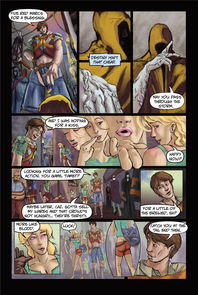 (visit website for full page)
The web-based graphic novel I've been working on for what seems like (and actually does add up to) a few years has launched. Updates every Thursday with a new page. Issue 1 is pretty great, and it'll only get better. It's sort of an ensemble fantasy action comic- not traditional sword and sorcery, mind you. No elves, dragons, that shite. It's a different take on a fantasy world and I hope people will like it. There are some interesting hints in the wiki if you are into that sort of thing. We try to avoid the orgy of exposition that usually comes along with such worldbuilding, so if you aren't sure what's going on the wiki is there for that too.
Visit bloodless.co if it sounds up your alley. Now that the issue is up and posted I can get back to my animated film, the status of which is somewhere between an unfinished masterpiece and an anecdote from Don Quixote.
Subscribe to:
Posts (Atom)

